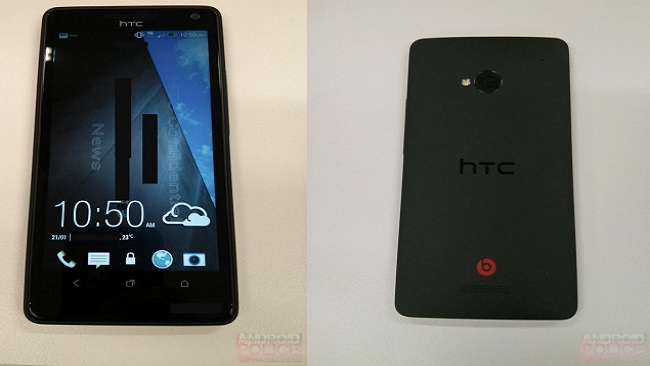
If HTC has its way, soon the term Megapixel will deleted from our lexicon. Instead, “Ultrapixel” will become the new way to measure the capacity of smartphone cameras. Pocket-Lint has reported that HTC is to use this new camera technology, already in use by a host of manufacturers, in the upcoming M7. HTC will use three separate image sensors, that are take the images and stitch them together into one image.
So what’s really going on with all this “Ultrapixel” nonsense? Well, HTC is claiming that the camera on the M7 will be 13-Megapixels, but in reality, it will have three sensors at 4.3 megapixels each. When the images are combined, they reach close to the 13-MP standard. This technique means that three lots of data can represent one pixel, making the extra data available to be intelligently “combined” to make a crisp, clean image and better color accuracy.
With HTC banking on “Ultrapixel” technology as a selling point for the M7, we’re curious to see how well the technology works and if consumers will really be sold by camera features on a handset alone. Although we still do not have detailed specs on the upcoming M7, we can only assume that the camera won’t be HTC’s only selling point, but may be one that HTC puts much attention on.
On February 19th, HTC will most likely be unveiling the M7 at their press event in New York and London.
[Via: PocketLint]