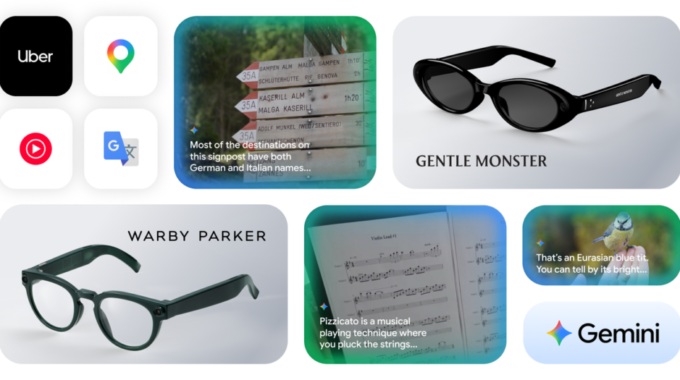
Google is betting that the future of augmented reality lies not in bulky headsets, but in stylish glasses that blend seamlessly into daily life. The company unveiled its vision for intelligent eyewear at Google I/O 2026, showing off new frames from fashion brands Gentle Monster and Warby Parker that pack AI-powered features into designs you’d actually want to wear.
The glasses represent Google’s latest push into the competitive AR market, where Apple, Meta, and others are racing to create the next computing platform. Unlike previous attempts at smart glasses that focused on displaying information, Google is starting with audio-first devices that keep users connected without screens in their line of sight.
Two types of intelligent eyewear are in development: audio glasses launching this fall, and display glasses coming later. Both integrate Google’s Gemini AI assistant and work with Android and iOS phones. The audio glasses deliver spoken assistance through built-in speakers, while display glasses will show information directly in your field of view.
The partnership with established eyewear brands addresses one of the biggest challenges in wearable tech – making devices people actually want to wear. Previous smart glasses from Google and others failed partly because they looked obviously technological. By working with Gentle Monster and Warby Parker, Google hopes to create glasses that look like regular eyewear.
Users activate the glasses by saying “Hey Google” or tapping the frame. From there, Gemini can handle various tasks:
- Answer questions about what you’re looking at, like restaurant reviews or parking sign meanings
- Provide turn-by-turn navigation using the glasses’ location and orientation sensors
- Manage calls and messages hands-free, with Gemini summarizing missed texts
- Take photos and videos, with AI editing features like background removal
- Translate speech and text in real-time with voice matching
- Handle complex tasks like placing food orders through apps
- Connect with third-party apps like Uber and language learning platforms
The audio glasses use “over-ear speakers” that keep sound private while allowing ambient noise through. This design lets users stay aware of their surroundings while receiving AI assistance.
Google’s approach reflects lessons learned from the original Google Glass, which faced criticism for its obvious camera and screen. These new glasses prioritize subtlety and style over flashy features. The company built Android XR in partnership with Samsung and Qualcomm, suggesting broader hardware support beyond just Google’s own efforts.
The intelligent eyewear market is heating up as companies search for the next major computing platform after smartphones. Apple is rumored to be working on similar devices, while Meta has found some success with its Ray-Ban smart glasses that focus on basic features like calls and music.
Google’s Gemini integration could give it an advantage, as the AI assistant can handle complex, multi-step requests that simpler voice assistants struggle with. The ability to process visual information and provide contextual help based on what users see represents a significant step forward for wearable AI.
The fall launch timeline puts Google ahead of some competitors in bringing truly AI-powered glasses to market. Success will depend on whether consumers are ready to adopt a new category of wearable device and whether Google can deliver on its promise of all-day wearability and usefulness.