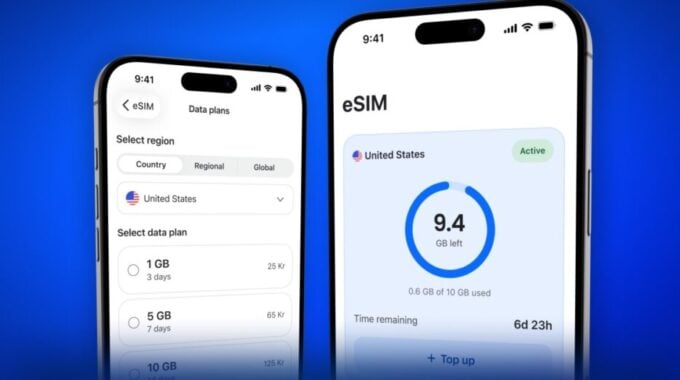
Truecaller is making a major bet beyond caller ID services. The company launched eSIM services for travelers, marking its push into a completely new business line as ad revenues continue to disappoint.
The timing isn’t coincidental. Truecaller just cut 70 jobs last week and posted weak Q1 2026 results. Net sales dropped 27% to 362 million SEK ($39.34 million), while ad revenues plummeted 44%. The company needs new revenue streams, and the growing eSIM market looks attractive.
Truecaller’s eSIM plans range from 1 GB over 7 days to 20 GB over 30 days. The service launches in 29 countries including major markets like the United States, United Kingdom, Germany, France, Australia, and Canada. The full list spans Europe, North America, and select markets in Asia, Africa, and South America.
India, Truecaller’s biggest market, is notably absent. The country’s strict telecom regulations previously led to blocks on eSIM providers Airalo and Holafly over fraud concerns. This regulatory environment makes it challenging for international eSIM services to operate there.
The company is partnering with global cellular connectivity provider Telna and telecom software provider Telness Tech to power the eSIM platform. But Truecaller believes its main advantage lies elsewhere – its massive existing user base.
“The starting point is different from other players in the category. They have had to build their audiences from zero,” Truecaller chief operating officer Fredrik Kjell told TechCrunch. “We are offering travel eSIM inside our app that over 500 million people already use and trust every month.”
This distribution advantage could prove significant in a crowded market. Truecaller faces established competitors including Airalo, Holafly, Roamless, and NordVPN’s Saily. These companies have spent years building their customer bases from scratch, while Truecaller can immediately reach hundreds of millions of users.
The move reflects broader trends in the eSIM industry. Travel eSIM adoption is rising as more devices support the technology and travelers seek easier connectivity options. Investor interest is strong too – eSIM startups including Airalo, Roamless, Kolet, eSIMo, and Truley raised millions in funding over the past year.
For Truecaller, eSIM represents more than just revenue diversification. Kjell positions it as making the app more useful for existing users. This fits the company’s strategy of building subscription revenues through new features like AI Assistant and Family Protection as traditional ad income becomes less reliable.
The broader context matters here. Many tech companies that built their business models around advertising are struggling with economic headwinds and changing user behavior. Truecaller’s pivot to subscription services and new revenue streams like eSIM reflects the challenges facing ad-dependent businesses in 2026.