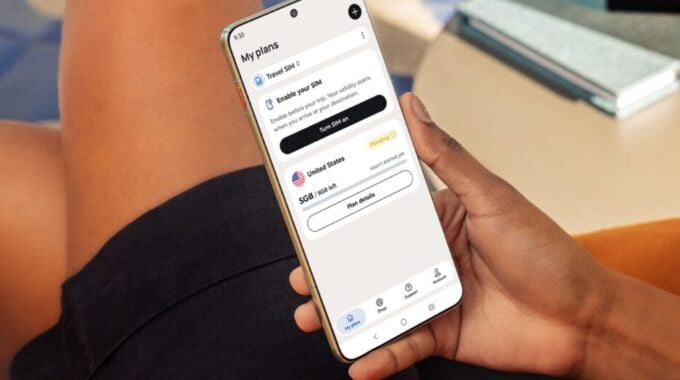
Staying connected while traveling has always been more complicated than it needs to be. You land somewhere new, your home SIM is either blocked or billing you a fortune per megabyte, and suddenly finding your hotel or calling a ride turns into a minor crisis. It’s a problem the travel tech industry has tried to solve with physical SIM swaps, third-party eSIM apps, and carrier add-ons, but none of those solutions have ever been truly seamless or built into the phone itself.
Motorola is taking a different approach. The company has announced Global Connect, what it calls the first native travel connectivity app built directly into a major smartphone. Powered by Gigs, a company that specializes in embedded mobile connectivity, the app comes pre-installed on millions of Motorola devices and is also available on the Google Play Store in select markets.
The timing is deliberate. With the FIFA World Cup driving a wave of international travel across Latin America and beyond, Motorola is positioning Global Connect as the go-to tool for fans heading to stadiums or watching matches while on the road. Every eligible user gets 1GB of complimentary data to get started, with coverage in more than 160 countries.
What makes Global Connect notable is how it handles the actual connectivity experience. Rather than requiring users to buy and install a new eSIM each time they cross a border, a single eSIM works across all supported countries. That’s a practical detail that matters more than it sounds. Swapping eSIM profiles is fiddly, and most travelers don’t want to think about it every time they move between countries.
The free 1GB included at launch is enough for real use. Motorola says it covers roughly one hour of video streaming or more than 10 hours of web browsing. After that, topping up works through the app itself:
- Open Global Connect
- Choose your destination and data amount
- Buy and install the eSIM
- Connect
Pricing is described as transparent, with no hidden fees, and the app pulls from hundreds of carrier networks globally to deliver the strongest available signal at any given location.
Global Connect is live today in Brazil, Mexico, Argentina, Peru, and Chile. Motorola says European markets will follow later in 2026. The rollout makes sense geographically given where much of the football tournament activity is concentrated, and Latin America is a region where Motorola has strong device penetration.
The broader context here is worth noting. The travel eSIM market has grown quickly, with standalone apps like Airalo and Holafly picking up millions of users over the past few years. But those are third-party apps that travelers have to find, download, and trust on their own. Building the capability directly into the device at the OS level changes the dynamic. Motorola users don’t need to know what an eSIM is or go looking for a solution. The solution is already there when they need it.
There is one requirement worth flagging: the device must support eSIM. Older or budget Motorola hardware without eSIM support won’t be eligible, so users should check compatibility before expecting the free data to work.
For Motorola, this is also a way to add a recurring revenue layer to its device ecosystem without requiring users to sign a new contract or switch carriers. It’s a model that makes sense as smartphone hardware margins stay thin and manufacturers look for ways to offer ongoing value after the initial sale.