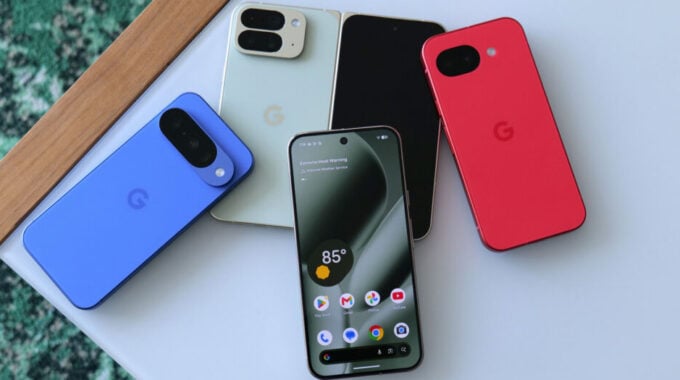
Google sells Pixel phones in more than 30 countries, and like any major hardware maker, it adjusts its products to meet local regulations, network standards, and customer habits. That means the Pixel you buy in London or Tokyo is not identical to the one sold in New York, even if they look the same on the shelf.
As reported by Engadget, the differences between US and international Pixel models are actually pretty minor compared to what you see with other Android brands. But a few specific details, especially around SIM cards and cellular connectivity, are worth understanding if you travel frequently, plan to move abroad, or are thinking about importing a handset.
This matters because the smartphone market is increasingly global. More people are buying phones online from foreign retailers, carrying devices across borders, or relocating and wondering whether their current phone will work properly. Knowing what actually changes between regional variants helps you make a smarter purchase decision.
On the hardware side, Google keeps things consistent across regions in ways that Samsung, for example, does not. Samsung has long sold phones with different processors depending on the market, swapping Snapdragon chips for its own Exynos silicon in Europe and other regions. Google does not do this. Recent Pixel phones sold internationally use the same Tensor chips, the same amount of RAM, the same camera sensors, and the same display technology as US versions. On the Pixel 10, that means:
- Tensor G5 processor
- 12GB of RAM
- 6.3-inch Actua OLED display
- 48MP main, 12MP ultra-wide, and 10.8MP telephoto cameras
128GB or 256GB of storage
The physical design, materials, and color options are also the same across regions. So if you are comparing a US Pixel 10 to a UK or Australian one, they are essentially the same device in terms of what you can see and touch.
The one hardware difference worth flagging is SIM card support. In the US, the Pixel 10, Pixel 10 Pro, and Pixel 10 Pro XL are all eSIM-only. International versions of those same phones still include a physical Nano SIM slot alongside eSIM support. Google says this is because American carriers have widely adopted eSIM technology, making a physical slot unnecessary. Removing it also frees up internal space for the mmWave 5G components that US models require. The exception is the Pixel 10 Pro Fold, which includes a physical Nano SIM tray in every market, including the US.
Software differences are also limited, though there is one consistent pattern to be aware of. Because Google supports so many languages and has to clear regulatory hurdles in each country it sells in, new features often arrive in the US first and roll out to other markets later. A current example is Magic Cue, an AI tool that surfaces relevant information like addresses or calendar details based on the context of your messages. Right now it is available in the US, Canada, the UK, India, Japan, and a handful of other countries, while Google works to expand support elsewhere.
Cellular compatibility is where the differences become most practical. This is partly obvious since every country has its own carriers and frequency bands, but the specifics matter more than most people realize. The biggest gap is mmWave 5G. In the US, carriers like Verizon have built out mmWave networks that offer very fast speeds over short distances. Most international Pixel models do not support mmWave 5G because the technology is far less common outside the US, and including it would add cost without much benefit for most users abroad.
The US also has stricter carrier certification requirements than many other countries, which is one reason why phones from Chinese brands are rarely available through official US carrier channels. This testing process adds another layer of regional variation that affects which devices end up on shelves in America.
Overall, if you are moving to another country and wondering whether to buy your next Pixel at home or abroad, the practical answer is to buy it where you will be living. Carrier compatibility alone makes that the simpler choice. But in terms of raw hardware, the differences between a US Pixel and an international one are small enough that most users would never notice them in day-to-day use.