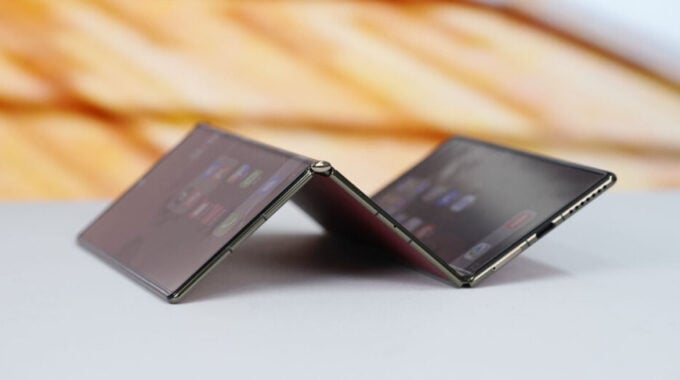
Huawei is gearing up for a big second half of 2026. The company has two flagship foldables in the pipeline: the Mate X8 and the Mate XT 2 tri-fold. And if a new leak holds up, both phones could arrive with a chip that is several generations ahead of what Huawei has used in its foldables before.
According to Huawei Central, tipster DigitalChatStation claims that both the Mate X8 and the Mate XT 2 will run on the next-generation Kirin 9050. That would be a significant jump from where Huawei currently stands with its foldable lineup.
To understand why this matters, consider the current chip situation. The original Mate XT tri-fold uses the Kirin 9020. The Mate X7, Huawei’s most recent dual-fold flagship, uses the Kirin 9030 Pro. If the Kirin 9050 is real and lands in both upcoming devices, that puts them three generations ahead of the Mate XT and two ahead of the Mate X7.
This is a notable shift in strategy. Huawei has historically launched its tri-fold phones with older chips. The original Mate XT was a prime example of that, arriving with impressive hardware on the outside but a processor that was already behind the curve. If the 9050 Pro ends up in the Mate XT 2, it would signal that Huawei is finally treating its foldables as true performance flagships rather than design showcases.
The leak also points to two versions of the Kirin 9050 series:
- A standard variant
- A Pro variant, expected to power the Mate XT 2 tri-fold
It is not yet clear which version would go into the Mate X8, or whether the same chip family would show up in the Mate 90 series later this year.
On the technical side, early reports suggest Huawei is developing the 9050 using a dual-layer vertical chip arrangement. The idea behind this design is to pack more transistors into a smaller space, which should improve both processing speed and power efficiency. This kind of stacked architecture is something chipmakers around the world are exploring, and it would be a meaningful step forward for Huawei’s in-house silicon efforts, which have faced pressure due to ongoing trade restrictions on advanced manufacturing equipment.
That context matters. Huawei has had to be creative with its chip development because access to cutting-edge fabrication nodes remains restricted. A new architecture that squeezes more performance out of existing processes would help the company close the gap with rivals like Qualcomm and MediaTek, at least on paper.
The tipster has not shared detailed specs for the Kirin 9050 yet, so the full performance picture is still unclear. But if Huawei does follow through on this chip strategy, the Mate X8 and Mate XT 2 could be the most capable foldables the company has ever shipped, not just in terms of form factor, but raw performance too.