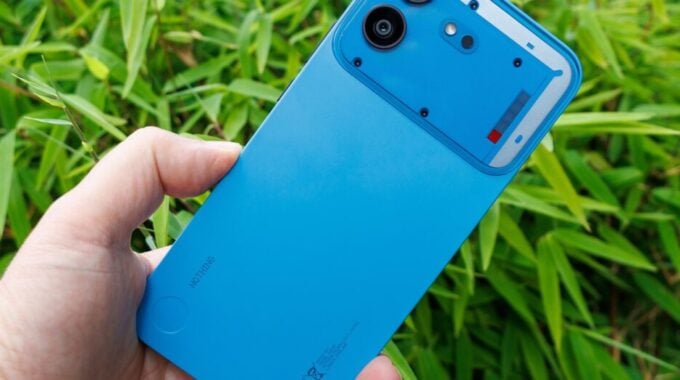
Nothing has a new phone, and it comes with a new naming convention. The Nothing Phone (4b) is the first device in what the company is calling its (b) series, sitting alongside the existing numbered lineup. It fills a gap left by CMF, Nothing’s sub-brand, which announced last month that it was cancelling the phone it had planned to release this year. Budget smartphone buyers now have somewhere to turn.
The Phone (4b) sits in an interesting spot. It borrows design elements from two phones at once: the Glyph bar from the Phone (4a) and the unibody construction, large camera island, and round corner recess from the Phone (4a) Pro. The body is polycarbonate rather than aluminum, which keeps costs down, but the result is a phone that looks more premium than its price tag suggests.
At 329 euros for the base model in Germany and Austria, this is clearly a device aimed at shoppers who want a solid Android experience without spending flagship money. That’s a smart move in a market where mid-range phones are getting harder to distinguish from each other.
Screen and performance specs
The Phone (4b) has a 6.77-inch LTPS AMOLED display with a 2344 x 1080 resolution. Key display specs include:
- 120Hz refresh rate
- 1000Hz touch sampling rate
- 480Hz PWM frequency, which can reduce eye strain from screen flicker
- 2000 nits peak brightness
Under the hood sits a Snapdragon 6 Gen 4 processor paired with 8GB of RAM. Storage options are 128GB or 256GB, both using UFS 2.2. The phone also has a 4,400 square millimeter vapor chamber for heat management during extended gaming sessions.
Camera system with some Google input
The rear camera setup consists of a 50MP Samsung sensor with optical and electronic image stabilization, plus an 8MP ultrawide with a 119.5-degree field of view. The front camera is 16MP. Nothing says the phone can record 4K video at 30fps and can capture from the front and rear cameras at the same time.
One notable addition is Ultra XDR mode, which Nothing co-developed with Google. It captures photos with extra dynamic range detail that can be shared directly to Google Photos and Instagram. The phone also comes with a set of filters, including two exclusive ones: Disco, which applies dynamic lighting effects, and DV, which gives photos an analog film look.
A 360-degree light sensor on the back helps with ambient light detection and exposure control. When recording video, a red light on the Glyph Bar blinks as a visual indicator.
Glyph Bar, Essential Key, and everyday features
The Glyph Bar works the same way it does on the Phone (4a), showing live updates from apps like Uber, Zomato, and Google Maps. There is also a dedicated button on the left side called the Essential Key, which gives quick access to AI tools.
Other connectivity and hardware specs worth noting:
- NFC
- Bluetooth 6.0
- Wi-Fi 6
- Optical in-display fingerprint scanner
- Stereo speakers with dual microphones
- Dual nano SIM support (the Japanese model adds eSIM)
Battery: Nothing’s biggest yet
The standard Phone (4b) has a 5,200mAh battery. The version sold in India goes further with a 6,000mAh cell, the largest Nothing has ever put in one of its phones. Both versions support 33W wired fast charging and 7.5W reverse wired charging, so you can top up other devices from the phone itself.
Software and durability
The phone ships with Nothing OS 4.1, based on Android 16. Nothing is promising three years of Android updates and six years of security patches, which is a reasonable commitment for a budget device and puts it ahead of some rivals in this price range.
The Phone (4b) has an IP64 rating, meaning it can handle dust and water splashes but is not fully waterproof. Nothing also says it can handle extreme temperatures and is 20% more resistant to bending compared to the Phone (3a) Lite. A UV coating on the back helps reduce fingerprint marks.
Color options are Black, White, Blue, and a Red finish exclusive to India. Pricing is 329 euros for the 128GB model in Germany and Austria, and CHF 299 in Switzerland.