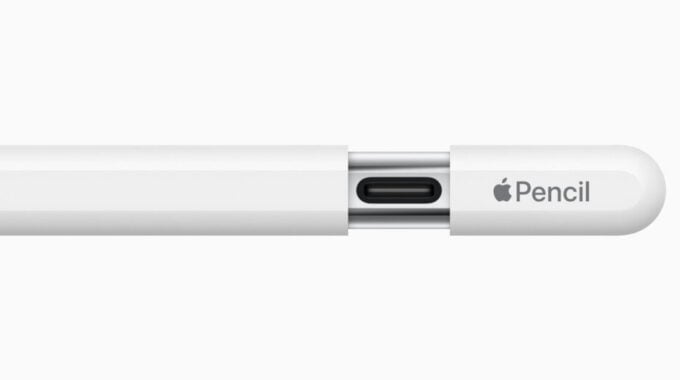
Apple could be getting ready to refresh its entire Apple Pencil lineup, and this time the changes might go deeper than just a new port or sensor. According to Engadget, Bloomberg’s Mark Gurman reports that two new Apple Pencil models are in development, with a release expected in the first half of 2027 alongside updated iPad hardware.
The two models reportedly in the works are an update to the entry-level USB-C Apple Pencil, codenamed B582, and a refresh of the Apple Pencil Pro, codenamed B632. The bigger story, though, is what’s driving the changes under the hood. Apple is said to be working on making the new Pencils comply with European Union rules that require consumer electronics to have more easily replaceable batteries.
That’s a significant shift. Right now, every Apple Pencil on the market gets a failing grade from repair site iFixit specifically because their batteries can’t be replaced once they wear out. The styluses are essentially disposable once the battery dies, which is both wasteful and expensive for users who have to buy a replacement rather than just swap out a cell.
The EU’s Battery Regulation, which is being phased in across different product categories, is the same kind of external pressure that pushed Apple to drop the Lightning connector on the iPhone 15 in favor of USB-C. That was a major change Apple resisted for years before European law made it unavoidable. Repairability is shaping up to be the next area where regulation moves faster than Apple’s own roadmap.
For Apple Pencil users, the practical benefits are clear:
- A replaceable battery means the stylus lasts longer before needing full replacement
- It reduces electronic waste from devices thrown away simply because a battery degraded
- It could lower the long-term cost of ownership for students, artists, and professionals who rely on the Pencil daily
Apple has been selling Apple Pencils since 2015, and the lineup has grown steadily. The current range includes the basic USB-C model, the older second-generation Pencil, and the Apple Pencil Pro, which added a squeeze gesture sensor when it launched in 2024. It’s been nearly three years since the USB-C refresh and two years since the Pro model arrived, so an update in the first half of 2027 fits a reasonable product cycle.
Whether Apple will apply repairability improvements to both models or just one remains unclear. Gurman’s report specifically highlights the Pro model in connection with the design changes, but the EU rules apply broadly, so it would make sense for Apple to bring both products into compliance at the same time. The company has typically rolled out regulatory changes across its product lines rather than making exceptions for individual models.
This also fits a wider pattern in the industry. Right to repair has gone from a niche concern to a real policy issue in both Europe and the United States, and manufacturers are increasingly being forced to design products with end-of-life serviceability in mind. For a product like the Apple Pencil, which sits at the premium end of the stylus market, making it repairable rather than replaceable is a reasonable expectation that users have had for years.