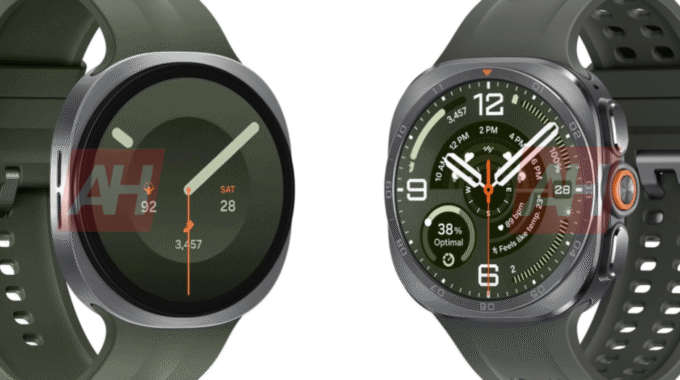
Samsung is about to make its biggest smartwatch chip change in years. According to WinFuture, the Galaxy Watch 9 series and the Galaxy Watch Ultra 2 will both ditch Samsung’s in-house Exynos chips in favor of Qualcomm silicon. That’s a notable shift for a company that has historically kept its wearable and smartphone chip development separate from its Qualcomm partnerships.
The move matters for more than just the brand name on the silicon. Qualcomm’s Snapdragon Wear platform has a strong track record in third-party smartwatches, and Samsung adopting it across its entire watch lineup signals growing confidence in what Qualcomm can deliver at low power. It also comes at a time when smartwatch performance is under more scrutiny than ever, as Apple and Google both push harder on health features that demand faster, more efficient processors.
The specific chip inside all three new watches is the Qualcomm Snapdragon Wear Elite, also known as the SW6100. It’s built on a 3-nanometer process, supports 64-bit computing, and has five cores in total: one performance core running at 2.1 GHz and four efficiency cores running at up to 1.95 GHz. That’s a solid setup for a device meant to last all day on a small battery.
Depending on the model, the chip pairs with 2 GB of RAM and either 32 GB or 64 GB of internal storage. That storage bump to 64 GB on some models is a welcome change for users who store music or offline maps directly on their wrist.
On the display side, things stay largely the same. The 40 mm Galaxy Watch 9 keeps its 1.3-inch screen at 438 x 438 pixels, while the 44 mm Watch 9 and the 47 mm Watch Ultra 2 both run at 480 x 480 pixels on a screen just under 1.5 inches. Screen resolution was not a pain point for the previous generation, so there’s little reason to change it.
Battery life is where things get more interesting, especially for the Ultra 2. Here’s how the three models stack up:
- Galaxy Watch 9 (40 mm): 325 mAh, unchanged from the previous generation
- Galaxy Watch 9 (44 mm): 445 mAh, a small increase that now matches what the discontinued Classic variant offered
- Galaxy Watch Ultra 2 (47 mm): 800 mAh, up from 590 mAh in the original Ultra
That 35 percent jump in battery capacity for the Ultra 2 is the headline figure. Whether it translates to meaningfully longer real-world battery life depends on how the new Qualcomm chip handles power management, but the hardware headroom is clearly there.
All three watches support Bluetooth 6.0, NFC, and dual-band Wi-Fi. LTE variants will also connect to cellular networks. The Watch 9 models use aluminum cases, while the Ultra 2 returns to titanium for most of its body, which keeps weight down while adding durability. Water resistance is rated to 100 meters for the Ultra 2, compared to 5 ATM for the standard models.
The software running everything is Wear OS paired with Samsung’s new One UI Watch 9.0. The usual suite of health sensors returns, including support for ECG readings, though Samsung hasn’t confirmed whether any new health features are coming beyond what the Watch 8 series offered.
Pricing is going up. The 40 mm Galaxy Watch 9 will start at 409 euros, the 44 mm version at 439 euros, and the Galaxy Watch Ultra 2 at 749 euros. That Ultra price in particular is a significant ask, though the larger battery and titanium build give buyers more to justify the cost than before. Samsung hasn’t set an official announcement date yet, but the company typically reveals its new watch lineup alongside its Galaxy Unpacked foldable event each summer.