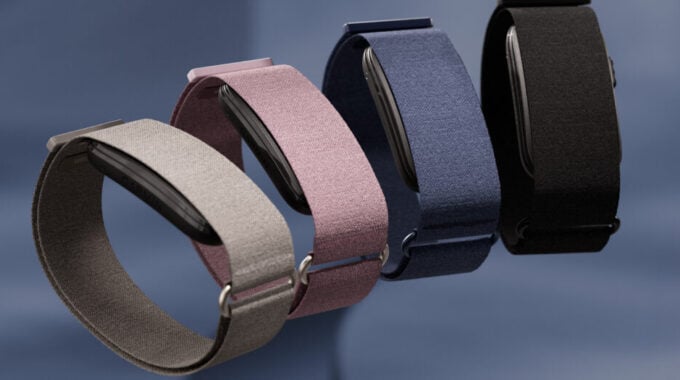
Garmin has long dominated the GPS watch market, but it has watched from the sidelines as screenless fitness trackers carved out their own growing niche. Brands like Whoop and Google’s Fitbit Air have built loyal followings among people who want health data without the constant pull of a screen on their wrist. Now, Garmin is stepping in with its first screenless wearable, the Cirqa Smart Band.
As reported by Engadget, the Cirqa is priced at $200 and is available now. It comes in two strap sizes and seven colors: Citron Gray, Mauve, French Gray, Dark Olive, Captain Blue, French Blue, and Black. You can wear it on your wrist or as an arm band, and a single button on the side lets you cycle through activities to track.
The screenless tracker category has been growing steadily. Consumers are increasingly aware of screen fatigue, and there is real demand for health monitoring tools that stay out of your way. Garmin entering this space is a signal that the category has matured enough to attract one of the biggest names in wearables.
The Cirqa tracks a solid range of health and fitness data. Here is what it covers:
- Daily step count, burned calories, and sleep
- Heart rate, blood oxygen levels, stress, and skin temperature
- Auto-tracking for more than 80 activities, including walking, running, and yoga
- Recovery time insights
- Activity route tracking via Connected GPS, which piggybacks off a paired iPhone or Android phone’s GPS signal
All of this data feeds into the Garmin Connect app, which is where you actually see your numbers. That is the trade-off with any screenless tracker: the band itself tells you nothing, so your phone does the heavy lifting when it comes to reading your stats.
One thing worth noting is how Garmin has handled the subscription question. Many competitors in this space require a paid membership to get meaningful value from the device. Whoop, for example, has built its entire business model around a subscription. Garmin is not doing that here. A Garmin Connect+ subscription unlocks some advanced features, but everything listed above works without one. That is a meaningful advantage for buyers who do not want ongoing costs on top of the hardware price.
The 10-day battery life is also competitive. Most smartwatches struggle to hit a week, and having a tracker that can go nearly two weeks between charges reduces one more friction point for daily wear. For a device designed to stay on your wrist around the clock, that matters.
Whether the Cirqa wins over dedicated Whoop users remains to be seen. Whoop has a strong community and a depth of performance data that appeals to serious athletes. But Garmin’s reputation for reliability, combined with no mandatory subscription and a one-time $200 price, gives the Cirqa a clear pitch to the mainstream fitness crowd who want simple, consistent tracking without the extras.