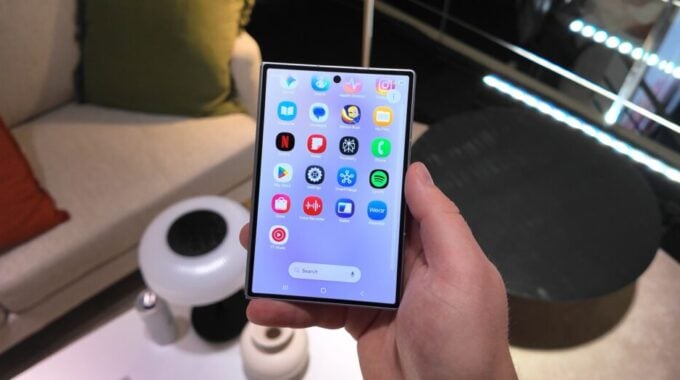
Samsung broke its own pre-order records with the Galaxy Z Fold 8. And now it literally cannot build the phone fast enough. That’s the kind of problem most phone makers would kill for, but it’s still a problem.
According to SamMobile, Samsung is facing a serious shortage of display driver integrated circuits, the chips that control how a phone’s screen functions. These DDIs, as they’re called, are custom-designed by Samsung’s own System LSI division and manufactured by Taiwan’s United Microelectronics Corporation using a 22nm process. The catch? UMC has hit its production ceiling. It simply cannot spin these chips out any faster, no matter how much Samsung wants it to.
Samsung reportedly asked UMC to kick off what’s called a “super hot run,” which is essentially an emergency fast-track production run. Even that wasn’t enough. So Samsung is now doing something fairly drastic: pulling DDI stock that was originally reserved for next year’s product development and redirecting it to current manufacturing. That means the Z Fold 8’s success is already eating into the roadmap for 2027 devices. Wild.
Part of what makes this situation so tricky is that DDIs aren’t like general memory chips you can shuffle between devices. They’re custom-built for a specific phone, which means you can’t just borrow a stockpile from the Galaxy S lineup and call it a day. And standard wafer processing takes around four months. The wafers then get paired with OLED panels from Samsung Display before the full display assembly reaches Samsung’s mobile division. It’s a long pipeline, and right now, it’s backed up.
This matters beyond just Samsung’s supply chain headaches. Foldables have long been considered a niche category, a premium curiosity for early adopters willing to pay flagship-plus prices for a phone that folds. The Z Fold 8 blowing past pre-order records, including the all-time high previously held by the Galaxy Note 10, suggests that foldables may finally be hitting something close to mainstream appeal. That’s a shift the whole industry should pay attention to.
Still, it’s not all good news across the board. The Galaxy Z Flip 8 is reportedly seeing lower-than-expected demand, which creates an interesting contrast. Consumers seem to be gravitating toward the big book-style foldable over the compact clamshell. That could say a lot about how buyers are thinking about what a foldable should actually do for them.
And the real test is coming. Apple is widely rumored to be announcing its first foldable iPhone, potentially called the iPhone Ultra, at a press event on September 9, 2026. If that phone lands later this year, Samsung will need every unit of the Z Fold 8 it can possibly ship. Being supply-constrained heading into that competition is not ideal. Samsung has the momentum right now. The question is whether it can hold it.