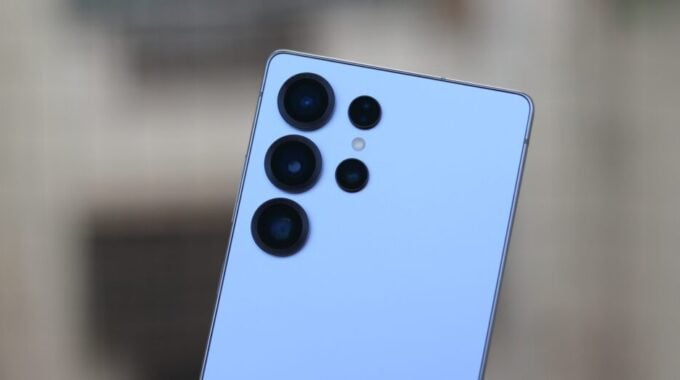
Samsung just quietly handed Galaxy S25 owners one of the more genuinely useful camera features the company has shipped in years. Horizon Lock, which keeps your video’s horizon perfectly level even if your phone rotates a full 360 degrees while you’re recording, has arrived on the Galaxy S25, S25+, and S25 Ultra through the first One UI 9.0 beta update. As reported by SamMobile, this is one of the standout additions from the beta drop that landed yesterday.
The feature originally launched with the Galaxy S26 series earlier in 2026. So this isn’t something Samsung invented overnight. It’s a trickle-down from the newer flagship lineup, which makes sense given that the recently released Galaxy S26 FE already had it. If the mid-range FE can run it, there’s no real reason to lock it away from the S25 family.
Here’s how it actually works. The phone uses its gyro sensor to detect rotation in real time and compensates by keeping the frame level. You could be running, jumping, or filming on a bumpy trail, and the horizon stays flat. That’s the kind of stabilization that action cam users have appreciated for years. Seeing it land on a mainstream smartphone camera is a big deal for anyone who shoots video on the go.
To turn it on, you need to do a few taps inside the camera app:
- Open the stock Camera app
- Switch to Video mode
- Tap the Super Steady icon, which looks like a running person
- Then tap the Horizon Lock icon, a running person inside a square frame
There is a trade-off. With Horizon Lock active, you’re capped at QHD resolution and 60fps. Standard video mode lets you shoot at 4K 60fps, so you are giving something up. For casual social content and action clips, QHD is more than fine. For anyone who needs maximum resolution, it’s a fair limitation to know about upfront.
What makes this move interesting is the broader pattern. Samsung is now backporting features from its latest flagship series to older models through software updates. That’s good for consumers who bought the S25 at launch and don’t want to feel immediately left behind. It also puts pressure on other Android makers to do the same. Apple has done this well for years. Samsung is getting better at it, and that’s something worth recognizing.