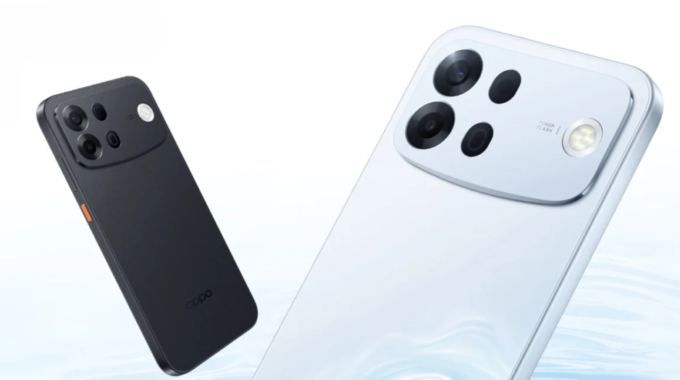
A 10,000mAh battery in a phone that’s only 8.6mm thin. That’s the headline here, and honestly, it’s a good one. Oppo has been quietly pushing the A7 Pro Max 5G beyond its home market, and now it’s officially launched in Austria, Malaysia, and Thailand. For anyone who’s tired of babysitting a battery percentage all day, this phone is making a strong case for itself.
The battery story doesn’t stop at capacity. Oppo paired that massive cell with 80W fast charging, which means you’re not stuck waiting half a day to top up. That combination, huge battery plus fast charging, is exactly what mid-range buyers have been asking for. Most phones in this price tier either give you big battery with slow charging or decent charging with a mediocre cell. The A7 Pro Max is trying to do both at once.
The screen is genuinely good for the price. It’s a 6.78-inch AMOLED panel running at 2,772 x 1,272 resolution with a 120Hz refresh rate and peak brightness of 1,800 nits. That brightness number matters more than people give it credit for. Outdoor readability on a lot of mid-rangers is genuinely terrible, and 1,800 nits should keep things visible even in direct sunlight.
The cameras are fine, but that’s about the most generous thing you can say. Oppo isn’t pitching this as a photography phone, and the specs reflect that. What does stand out visually is the multi-color Breathing Light on the back, similar in spirit to what we’ve seen on some Xiaomi devices. It pulses with notifications, and whether you love or hate that kind of thing, it does make the phone look distinct on a shelf full of identical black slabs.
Other specs worth knowing:
- IP69K water and dust resistance rating (yes, that’s higher than the typical IP68)
- Optical in-display fingerprint sensor
- NFC for contactless payments
- ColorOS 16 based on Android 16
- Dimensions of roughly 163 x 78 x 8.6mm, weight around 224g
That IP69K rating is actually a big deal and doesn’t get mentioned enough. IP68 is the standard most phones aim for, meaning protection against sustained submersion. IP69K adds resistance to high-pressure, high-temperature water jets. It’s a spec you usually see on rugged industrial devices, not consumer smartphones. Oppo putting it here is a genuine differentiator, not just a checkbox feature.
The weight sits at 224g, which isn’t light, but it’s not outrageous for a phone carrying this much battery. Oppo managed to keep the thickness under 9mm, which is a real engineering achievement when you consider what’s packed inside. This is the kind of phone that makes sense for travelers, outdoor types, or anyone who just wants to get through two full days without stressing about a wall socket.
Pricing hasn’t been confirmed for all markets yet, but given the A7 Pro Max’s positioning, expect it to land firmly in the mid-range bracket. If Oppo prices this right, it fills a gap that a lot of brands are ignoring. Battery anxiety is real, and not everyone wants to carry a power bank.