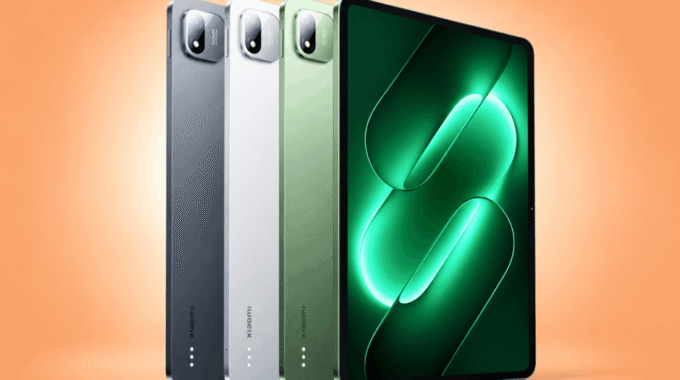
Xiaomi is not slowing down. Just a week after dropping the Pad 9 Pro Max as the flagship of its new tablet series, the company has opened pre-orders in China for two more models: the Pad 9 and the Pad 9 Pro. That’s a full three-tablet lineup in the space of about seven days. Xiaomi clearly wants to own every tier of the Android tablet market right now.
Two tablets, two different chips
The biggest difference between these two comes down to the processor. The standard Pad 9 runs on the Snapdragon 8s Gen 4, which is a solid mid-range-to-upper-mid chip. The Pad 9 Pro steps up to the Snapdragon 8 Gen 5, which puts it much closer to flagship territory. So depending on what you need and what you want to spend, there’s a clear distinction here. This isn’t just cosmetic upselling.
Both tablets run HyperOS 4, Xiaomi’s current software layer. And both come with keyboard and stylus support, which signals pretty clearly who these are aimed at.
Productivity is the whole pitch
Xiaomi is leaning hard into the work angle with this pair. The software lineup bundled in includes some genuinely useful tools alongside some you’ve probably never heard of.
- WPS for Pad, for document editing
- CapCut Pro, for video editing on the go
- ZWCAD, a CAD application for design work
- CAJ Reader, for academic and research documents
- Pixel Cake, an AI image tool
- Super Xiao Ai 2.0, Xiaomi’s AI assistant
- An AI office suite with something called Inspiration Ball
- Cross-platform task execution
That’s a lot of software to throw at a tablet launch. Some of it is genuinely useful, and some of it reads like checkbox marketing. But the CAD support is interesting. If ZWCAD runs well on these, that’s a real differentiator for professional users who want a portable drafting setup.
Colors and design
The Pad 9 comes in Ice Peach Pink, Spruce Green, Black, and Silver. The Pro drops the pink option and sticks with Spruce Green, Black, and Silver. Nothing shocking there, but the Spruce Green colorway looks sharp from what Xiaomi has shown.
No global pricing yet
Here’s the catch. Xiaomi has not said anything about international availability or pricing for either tablet. Pre-orders are live in China, and that’s where the story ends for now. Given how competitive the global Android tablet space has gotten, with Samsung, Honor, and others all pushing strong hardware, Xiaomi will need to price these aggressively if they want traction outside China.
Still, the fact that Xiaomi is building out a proper tiered tablet lineup matters. It shows the company is serious about tablets as a category, not just filling shelf space. Whether the global market gets these anytime soon is the real question.