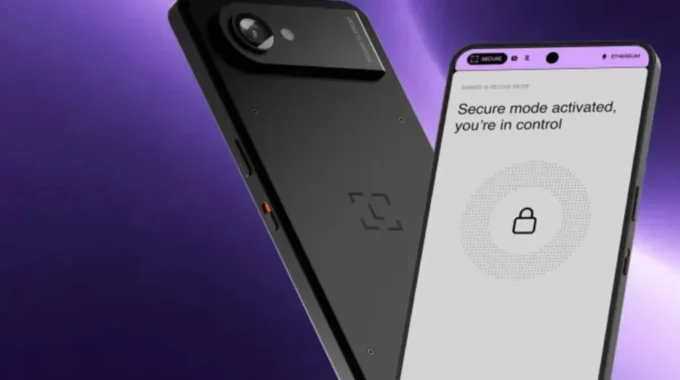
A $899 Android device with a 60Hz screen and one rear camera should be a punchline. Ledger is making a real argument for it anyway, and the reason is a second operating system hiding inside.
The Paris-based hardware wallet maker announced the Atom, a device that runs Android and Ledger OS side by side. Ledger OS lives on its own secure chip and handles crypto transactions away from the main system. Ledger is clear that this isn’t meant to replace your phone. It’s meant to sit next to it and guard your digital assets.
Let’s talk specs, because they’re modest. You get a 6.77-inch OLED panel capped at 60Hz, a Qualcomm Dragonwing chip instead of a Snapdragon, a 4,000mAh battery and a single rear camera. Ledger admits it can’t out-spec flagship Android phones, and honestly, good. Pretending otherwise would be silly.
What you get instead is a list of security and longevity perks:
- Five years of Android OS updates
- At least seven years of spare parts support, including a user-replaceable battery
- A physical privacy switch that cuts power to the camera and microphone
- Encrypted messaging between Atom users, decrypted inside Ledger OS
- Solana Mobile’s Seeker app preinstalled, with the Solana dApp Store (1,500+ apps) and Solana Wallet
That user-replaceable battery and seven-year parts pledge are the most refreshing things here. Most phone makers don’t promise that much, and it’s a nice jab at the sealed-slab approach.
Then there’s the AI angle. Ledger has teamed up with OpenClaw so AI agents can handle financial tasks without getting full access to your wallet. You still have to physically approve each transaction. I like that. AI agents moving money around on their own is a scary idea, and a hardware confirmation step is the right kind of brake. Whether it’s more than a buzzword layer is something we’ll only know when it ships.
The timing is interesting, and a little awkward. Ledger confirmed that at least one hardware signer sold by a reseller contained an unauthorized hardware implant. It read users’ 24-word recovery phrases and sent them out via eSIM. Ledger paused sales across Southeast Asia and at German retailer MediaMarkt. Reports put losses above $86 million, though Ledger hasn’t confirmed that figure.
So the Atom’s anti-tampering pitch is clearly a response. Ledger says a protective enclosure around the Secure Element, MCU and FPGA, plus detection for display and back-cover removal, would have blocked the screen reader implants involved. Tamper-evident packaging is part of it too. Those are claims, not proof, but at least they target the actual attack.
Pricing is where it gets real. The Atom arrives in summer 2027. A refundable $100 deposit locks in a Founder’s Edition for $849, and the price rises to $899 after launch. That’s a lot to pay for a second device, especially when a standard Ledger wallet costs far less.
Still, this matters beyond crypto. Supply chain trust is a growing problem for every connected gadget, and Ledger is betting people will pay for hardware they can actually believe in. For serious holders, that might make sense. For everyone else, it’s a pricey niche toy.