Holiday Gift Guide »

As the European economy collapses, so too does Apple’s market share in smartphones

Categories: Apple, iOS / iPhone OS, iPhone
By: , IntoMobile
Friday, December 23rd, 2011 at 3:38 AM

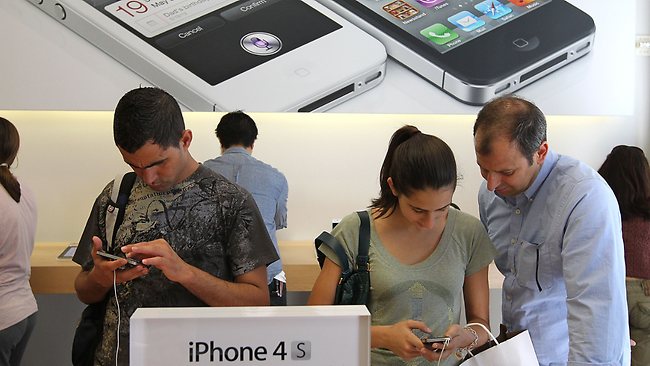
Things in Europe aren’t exactly going too well. Unemployment has become a serious issue in several of the bigger countries, the Euro is losing value against other currencies, and in some places there’s even riots taking place thanks to the steep tax hikes that governments are putting in place to reduce sovereign debt. Add all that up and what you get is a shift in consumer’s preferences for smartphones. Devices like the iPhone, which typically go for around 600 Euros, are selling in fewer numbers, meanwhile Android is blowing up because it provides better value for your money. According to a recent report from Reuters, between September and November of this year Apple’s market share in the French smartphone market has fallen from 29% to 20%. In Germany the fall was from 27% to 22%. “Similar drops were seen in Italy and Spain.” Meanwhile Android’s market share in Germany hit 61%, a figure we haven’t seen that high since Nokia was dominating the market with Symbian.

Will things get better? Of course they will, time has a way of fixing these sorts of things, but the bigger question is should Apple start cooking up a low cost iPhone? We’re not talking about simultaneously offering the 3GS, the 4, and the 4S, we’re talking a totally new device that can sell for 300 Euros or even lower that offers 80% of what a regular iPhone does. Apple has traditionally chased margins instead of market share, and that’s been fantastic for them, but today’s battles are different from the PC versus Mac war of the 90s and early 00s. When consumers invest in an ecosystem, whether that be by purchasing apps or using services that are optimized for one particular platform over the other, switching becomes an incredibly difficult thing to do.

What do you think, will 2012 be the year we see the iPhone for the masses?

About The Author

Stefan Constantinescu

Stefan Constantinescu (@WhatTheBit on Twitter) has loved technology since as far back as he can remember. It started with computers, but in the past few years his passion has turned to mobile devices. As a mobile phone enthusiast who lives and breathes devices that connect to the internet, he knows he is not alone with this radical fascination of all things wireless. He is strongly opinionated and enjoys a good debate so leave comments in his posts and he’ll get back to you! Stefan began blogging as a hobby in the fall of 2006 and joined IntoMobile in the summer of 2007. Later he got a job at Nokia in March 2008, but as of June 2009 he has rejoined the IntoMobile team. He is currently based out of Helsinki, Finland.

  • SJJ

    I doubt you see a low cost iPhone.  It’s a “premium” product.  

    The real question is, ” Would it matter?”  If people buy and become comfortable with Android, why would they switch to an iPhone?  The ecosystems are very close, and you’ve already noted the difficulties in that switch.  Plus, Androids are simply better in terms of hardware. They are faster and have bigger displays. 

    Apple needs to get their head out of the sand and realize they are getting outperformed in the marketplace.  That’s the real problem.  Improve the phone.  Processor speed may not matter to consumers, but pretty widgets and giant HD displays do.

  • http://www.intomobile.com/ Stefan Constantinescu

    “Apple needs to get their head out of the sand and realize they are getting outperformed in the marketplace.”

    In terms of market share, yep. In terms of profits, they’re printing money.

  • SJJ

    I was more referring to devices, but…

    Market share and profits go hand in hand.  They are printing money for three reasons

    1. In the past, their device was clearly the best product.
    2. They’ve increased their user base by adding carriers (Verizon, Sprint)
    3. Because they could pull share, they negotiated ripoff deals with the carriers. They have higher margins because the carriers agreed to pay them more.  Consumers generally pay the same amount as other premium 3G phones, but the carrier eats a bigger subsidy on iPhones.

    Numbers 1 and 2 drive number 3.  If the don’t have the best product or can’t pull incremental share, the carriers are going to demand Apple gets the same deal as everyone else.  If Apple wasn’t heavily subsidized in the U.S., their market share would be tumbling here already.  If they eat more of the subsidy, they make less profit.   

  • http://www.intomobile.com/ Stefan Constantinescu

    “Market share and profits go hand in hand.”

    If that was the case then why is Nokia losing money?

  • SJJ

    ?, Nokia’s smartphone market share has been demolished over the last few years.  They went from 40% of all mobile phones in 2007 to 27% of all mobile phones in 2011.  Their smart phone share was 50% in 2007 and is now 24%.

    They are losing money because they are selling fewer phones but their expenses are still high because they are staffed for higher sales.  The revenue line is still high even though it should be higher given their decline in smartphones.  It’s the expenses they have from the expectations of being a much larger player.
      
    Their market share fell and their profit fell as a result.  Is that not the expectation?

  • http://www.intomobile.com/ Stefan Constantinescu

    Nokia makes more phones, smart and dumb, than Apple. Everyone makes more phones than Apple. Why does Apple make all the money then?

  • SJJ

    Like I said before, because they are ripping off the carriers.  The price to the customer in the U.S.  is $199, but that is not the price to the carriers. Their market share is higher than it should be, because the carriers are eating that additional cost.

    Europeans are different because all phones are prepaid.   They can pay $900 for an iPhone or $600 for a similar Android device. In the U.S. the customer has the option of getting either phone at $199, but the carrier is paying for that other $300. They make all the money because they got the CARRIER to pay more.

    There was an article about this in the WSJ recently.  They called iPhone profits ” a transfer of wealth from the carriers shareholders to Apple.”  Unless they have a large share, this situation is unsustainable, and their margins will shrink to the size of everyone elses.

  • http://www.intomobile.com/ Stefan Constantinescu

    Apple’s margins have been shrinking? Really? And Nokia’s are increasing, right? No.

  • SJJ

    Apple’s margins will shrink unless they offer a much better experience and device than Android.  That’s been my point all along.  Sales are lagging in France and Germany because you can get a better experience cheaper Android.

    You offered the solution of under selling their current product by 300 Euros.  That’s cutting margins, isn’t it?

    If they are forced by carriers in the U.S. to pay more of the subsidy, margins will lower, right?

    Apple is simply at the peak of their cycle.  I remember when the RAZR was unstoppable. Same with Blackberrys or Palms or Nokia.  Their product will slow down and their margins will fall just like everyone elses.  They’ve just got the Fad product right now. 

  • http://www.intomobile.com/ Stefan Constantinescu

    Nope, my suggestion was to create a new, from the ground up, product that can retail for under 300 EUR.

    “Sales are lagging in France and Germany because you can get a better experience cheaper Android.”

    Cheaper? Yes. Better? That’s your opinion.

    “Apple is simply at the peak of their cycle.”

    Then why do they continue to break their sales records, quarter after quarter, year after year?

  • http://www.badcreditloans4u.ca/ bad credit loans

    iPhone is a great product such as Google smart phone and others are catching up.  Apple has been the product of the choice and they maybe ahead of the race but they need to keep that edge in their future innovation or they will be take over.  Lets not forget Google has very deep pockets.