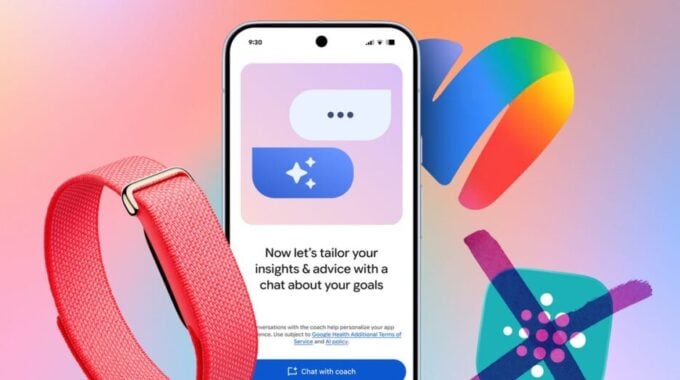
Google is making its biggest push yet into AI-powered health coaching with three major announcements that signal a clear shift from hardware-led tracking to software-driven wellness guidance. The company is betting that artificial intelligence can turn raw health data into actionable fitness plans better than traditional wearable interfaces.
The moves include a new screenless fitness tracker, an AI health coach graduating from beta testing, and a complete rebrand of the popular Fitbit app. Together, these changes represent Google’s most significant health tech strategy shift in years, potentially affecting millions of existing Fitbit users.
Fitbit Air targets serious fitness enthusiasts
Google announced the Fitbit Air, a $100 screenless fitness band that directly competes with training-focused trackers like Whoop. The device strips away traditional smartwatch features – no display, notifications, or time-telling – focusing purely on passive health monitoring.
Key features of the Fitbit Air include:
- Removable sensor design for easy charging and cleaning
- Focus on fitness tracking without screen distractions
- Compatibility with both iOS and Android devices
- Three months of Google Health Premium subscription included
- Stephen Curry special edition available for $130
The device is available for preorder starting Thursday and hits retail stores on May 26. The bigger strategy here isn’t the hardware itself, but rather driving users toward Google’s premium health subscription service.
AI health coach becomes the main attraction
Google’s Health Coach, built on the company’s Gemini AI platform, is rolling out to all Google Health Premium subscribers after months of public testing. The AI assistant transforms health data into personalized fitness plans, recovery guidance, and sleep insights without requiring user prompts.
The service costs $10 per month or $100 annually and now includes expanded capabilities like processing uploaded medical records, PDFs, and photos for more personalized recommendations. This puts Google in direct competition with similar AI coaching tools from Whoop, Garmin, and Oura, though the company believes its Gemini foundation provides a software advantage.
This represents a significant shift in how fitness trackers operate. Instead of users interpreting their own data through charts and graphs, the AI coach proactively suggests actions based on patterns in sleep, activity, and recovery metrics.
Fitbit app disappears in favor of Google Health
Perhaps the most impactful change for existing users is the complete rebrand of the Fitbit app. Starting May 19, the Fitbit app automatically updates to become the Google Health app for all users, with historical data transferring seamlessly. Google Fit users will also migrate to the new platform later this year.
The redesigned app consolidates data from multiple sources into four main tabs:
- Today – daily overview and quick actions
- Fitness – structured workout plans and activity tracking
- Sleep – detailed sleep analysis and trends
- Health – medical records and health metrics
For longtime Fitbit users, this represents the most significant platform change in years. The new interface emphasizes recovery and structured training plans over simple step counting, reflecting Google’s broader strategy shift toward comprehensive wellness coaching.
Privacy concerns remain as medical data expands
Google’s expanded health ambitions raise important privacy questions. When the company acquired Fitbit in 2020, it pledged to keep health data separate from its advertising business. Google reiterated this commitment alongside Thursday’s announcements, but the promise faces new scrutiny as more sensitive medical information flows into the platform.
The ability to upload medical records and have AI analyze personal health documents represents a significant expansion of Google’s health data access. Privacy advocates will likely monitor how well the company maintains its stated boundaries between health information and its core advertising business.
These announcements position Google squarely in the growing market for AI-powered health coaching, where companies are racing to turn wearable data into actionable wellness advice. The success of this strategy will depend on whether users find AI coaching valuable enough to justify ongoing subscription costs and trust Google with increasingly sensitive health information.